

Here are 9 remarkable international applications for life science patents that were published during the past month: wound hemostasis, metabolic syndrome, artificial glands and lymph nodes, malaria vaccines, oral coagulation factors for hemophila, brain cancer magnetotherapy, proliferative vitroretinopathy and rational methods for identifying regenerative tissue therapies are the focus areas.
PLEASE CITE AS : Mucke HAM. Patent Highlights for May 2011. Published online on the H.M. Pharma Consultancy Blog (URL:http://hmpharmacon.blogspot.com/2011/05/patent-highlights-for-may-2011.html) on May 29, 2011. Contact us at office@hmpharmacon.com .
Gallium Nitrate for Open Wounds
In a niche of medicine that tends to attract little attention today, work is being done on simple anorganic salts that have pharmacological activity beyond any potential role as trace elements. Gallium trinitrate is one such case (see e.g., Pharmacol Rev. 1998; 50(4): 665-82 [ PubMed ] and Int J Environ Res Public Health 2010; 7(5): 2337-61 [ PubMed ]); antiinflammatory activity and inhibition of bone resorption have been demonstrated. A formulation of Ga(NO3)3 (Genta, Inc.’s Ganite®) is FDA-approved as an i.v. infusion for the treatment of cancer related hypercalcemia . The ability of gallium nitrate to enhance the later stages of the wound healing process was disclosed in a series of patents by Bockman et. al., including US patents 5,556,645, 5,686,1 16, and 6,165,514, and 6,287,606. US patent application 2007/0155273 proposes a wound bandage incorporating solid gallium nitrate. So how could anybody claim such a use as new, as in WO 2011/051924 (Individual [IL]; May 5, 2011) ? The point is the use of solutions, applied directly to bleeding open wounds, for hemostasis. For the companion paper, see here . The inventor has founded Adjuvant Medical Solutions, an Israeli company offering personalized treatment for cancer and other chronic diseases.
Protein Engineering for Hyperlipidemia
Who might need antagonists of proprotein convertase subtilisin-kexin type 9? People with hypercholesterolemia could, especially if they also suffer from diabetes. PCSK9 lowers the amount of hepatic LDLR protein and thus compromises the liver’s ability to remove LDL cholesterol from the circulation. It is one of the rare new pharmacological targets that have actually brought new compounds into clinical trials (see two ahead-of print abstracts here and here ) and might be helpful in metabolic syndrome, especially with an hereditary background. It has also been been ascribed a role in the differentiation of hepatic and neuronal cells. WO 2011/053783 (Merck Sharpe & Dohme [US], May 5, 2011) defines its claims as extending to antibodies and engineered protein constructs that compete for binding to PCSK9 with one of two antibodies, AX132 and AX213. Results from computational docking studies and epitope mapping by hydrogen-deuterium exchange mass spectrometry (DXMS).
Artificial Glands – And Toolboxes For Synthetic Biology
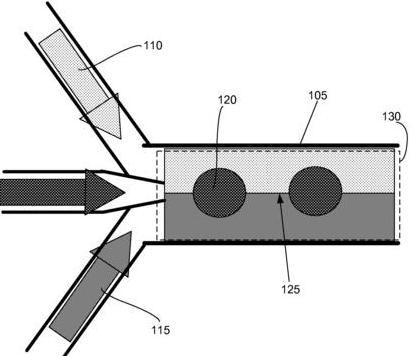
Implantable reservoirs or micro-volume cell-based bioreactors that secrete biologically active reaction products, optionally in response to parameters of their biological environment, constitute a special subsegment of medicine where biotechnology and medical devices meet to open new therapy options. WO 2011/056390 (Individual [US], May 12, 2011) combines the concept of laminar flow in microchannels with tropism and taxis, wherein living cells direct their movements to the surface of a droplet, bubble, gel, or combination thereof straddling the intersection of the two adjoining liquids in the laminar flow, stimulating their self-assembly into a continuous anisotropic membrane. Taxis may be driven by magnetic or electric fields, or laser light. This method has direct implications on the development of molecular and synthetic biology toolsets for redesigning or de novo engineering of biological signaling networks.
A Malaria Transmission-Blocking Vaccine
The complex life cycle of the Plasmodium parasite (see here ), which passes through the sporozoite, merozoite and gametocyte stage in man and then passes a series of stages in the mosquito midgut to produce sporozoites again, defied attempts at developing a preventive vaccine for malaria for decades. Only a single such vaccine (GlaxoSmithKline’s RTS,S ) has been developed, but it confers only 38-54% protection and does not block transmission. WO 2011/056877 (George Washington University [US]; May 12, 2011) aims at achieving this by preventing the development of malarial parasites within the mosquito. This could be a valuable component in a “cocktail” vaccine that would target different life stages of the parasite by separate vaccine components. The vaccine contains a fragment of the Anopheline midgut specific membrane-bound alanyl aminopeptidase, a putative ligand for P. falciparum and P. vivax ookinetes. which has already been proposed as an antimalarial drug target ( Trends Biochem Sci. 2010 Jan;35(1):53-61 [ PubMed ]. The 135 amino acid N-terminal fragment is highly immunogenic in rabbits, and achieved virtually complete development blockade in field isolates of both Plasmodium species in two completely divergent Anopheles vectors. The antigen was identified using Merck Research Laboratories’ Epitope Identification Suite, which also suggests in silico that the fragment would readily adsorb to aluminum hydroxide gel adjuvant, and would have very little cross-reactivity in humans.
Coagulation Factor Expression in Plants And Oral Tolerance
One of the most significant problems with chronic administration of recombinant therapeutic proteins, especially in hemophilia patients, is the development of neutralizing antibodies. At present this can be limited but never avoided. In addition, acute severe and type I hypersensitive allergic reactions have been reported for treatment of hemophilia A and B, lysosomal storage disorders such as Pompe and Fabry disease. Oral delivery of coagulation factors has long been discussed as a potential approach to tolerance induction in hemophilia but remains elusive. WO 2011/057243 (Univ. of Florida [US]; May 12, 2011) seeks an alternative approach, expressing coagulation factors in transgenic chloroplasts and inducing tolerance by oral administration of compositions comprising chloroplasts containing the expressed factors. Human coagulation factor IX was produced in lettuce as a cholera toxin beta fusion protein to ensure stability of the transgenic protein in the chloroplast. An additional nontoxic B subunit introduces high-affinity binding to the oligosaccharide domain of ganglioside GM1 (a lipid-based membrane receptor), thereby tethering the protein to the plasma membrane of host cells of the intestinal epithelium upon release from the plant cells in the ileum. The peer review companion paper is PNAS 2010; 107(15): 7101-6 [ PubMed ].
Nanoparticles And Magnetic Fields For Glioblastoma
Along with carcinoma of the pancreas and advanced small lung cell carcinoma, glioblastoma multiforme (primary brain cancer) is the solid tumor with the most dismal long-term prognosis. Glioblastoma is never completely resectable, tends to be radioresistant, and sheds cells into the surrounding healthy brain tissue. WO 2011/058018 (University of Hamburg [DE]; May 19, 2011) tries a new approach: magnetic nanoparticles that are the size of a protein (5-50 nm) or a virus (20-450 nm) and feature a core of iron or gadolinoium oxides covered by an adsorbed hydrophilic coating are applied directly to the tumor, whose cells internalize the particles. A static external magnetic field is then applied to concentrate freely moving malignant cells to a location where they are accessible to hyperthermia treatment or surgical removal. In related approaches, see Nanotechnology 2010; 21(45): 455102 [ PubMed ] from Toyo University, and J Neurooncol. 2011; 103(2): 317-24 [ PubMed ] from the German Armed Forces medical services.
A Combinatorial Approach to Tissue Regeneration
WO 2011/060298 (Tengion [US]; May 19, 2011) claims what can be best described as algorithmic discovery of multi-component cell therapies in vivo. The actual method is to complicated to be discussed here in any detail, but the patent application describes it in detail and gives examples, e.g. for chronic kidney disease where the list of core input elements comprises proximal and distal tubular cells, collecting duct cells, erythropoietin-producing cells, glomerular cells, and vascular cells. Hyaluronic acid, synthetic candidate biomaterials, and various forms of collagen serve as additional inputs. In vivo experiments were conducted to compare the effects of the above cell, cell/cell combinations, and cell/biomaterials in stimulating a regenerative outcome when introduced intra-renally, after disease onset in a terminal model of CKD. See also Tengion’s WO 2010/056328 claiming the isolated renal cell types.
On The Way To Articifial Lymph Nodes?
Cancer vaccines based on dendritic cells are limited by the minimal motility of these cells from subcutaneous or intradermal injection sites to locally draining lymph nodes. WO 2011/062909 (Moffitt Cancer Center [US]; May 26, 2011) claims bioengineered dendritic cells that can be loaded with tumor antigens or other antigens associated with disease. These engineered dendritic cells create the functional equivalent of lymph nodes at the site of their injection. How? They additionally express at least two chemokines to attract CD4+/CD8+ T cells, natural killer cells, and B cells. In some embodiments, these chemokines are CCL-21, CX3CL-1, and CXCL-13. Very extensive in vivo data show that this approach works, inter alia with a melanoma cell model. Staining for CD3 indicated that T-cells were recruited to follicle-like structures near the injection site, as desired. See Adv Immunol. 2010; 105: 131-57 [ PubMed ] for a review on artificial lymphoid tissue engineering.
Pharmacotherapy For Proliferative Vitroretinopathy
Retinal detachment can be caused directly by ocular trauma, or it can result from the traction of trauma-induced fibrous structures in the vitreous body that pull the retina from the retinal pigment epithelium; extreme myopia is a rarer cause. In either case, proliferative vitroretineopathy and contraction of pathological pre-retinal membranes are relatively rare but severe complications. Treatment is usually by replacing the vitreous body with a heavy silicon oil or a sulfur hexafluoride gas bubble. WO 2011/063161 (University of California [US]; May 26, 2011) might offer a pharmacological alternative, treatment with inhibitors of epithelial membrane protein-2 (EMP-2, a tetraspanin ). The results support a role for EMP-2 in facilitating the activation of the signalling complex consisting of focal adhesion kinase (FAK) and steroid receptor coactivator (Src) leading to collagen contraction. The companion paper is Curr Eye Res. 2011; 36(6): 546-52 [ PubMed ], building on work described in Invest Ophthalmol Vis Sci. 2009; 50(1): 462-9 [ PubMed ].