

This month’s reviewed patents are rife with claims indicating drug repurposing opportunities: the antidiabetic glibenclamide for cerebral malaria; various prenyltransferase inhibitors for hepatitis delta infection; and the antidepressant amitryptiline for lung cancer. There are plenty new compounds as well: carbolines for hearing loss and tinnitus,STEP inhibitors for cognitive disturbances esp. in schizophrenia, compounds for synucleinopathies, and parstatin for neovascular eye dseases.
PLEASE CITE AS : Mucke HAM. Patent Highlights for July 2011. Published online on the H.M. Pharma Consultancy Blog (URL:http://hmpharmacon.blogspot.com/2011/07/patent-highlights-for-july-2011.html) on July 29, 2011. Contact us at office@hmpharmacon.com .
Beta-Carbolines for Sensorineural Ear Conditions
While pharmacology has always paid attention to the eyes, the auditory system has been neglected in comparison: antibiotics left aside, there are very few drugs being developed for medical conditions that involve hearing and inner ear diseases. In WO 2011/079841 (Individual [DE]; July 7, 2011) there are claims for treating conditions involving the acoustic nerve (tinnitus, acoustic trauma, and Meniere’s disease) with 9-alkyl-beta-carbolines. The common mechanism is neuroprotection. Presented data show the activation of expression of neurotrophic factors, including BDNF and NGF as well as the expression of dopamine D1 receptors, specifically in dopaminergic neurons from rat organ of Corti. Additional data from human SH-SY5Y neuroblastoma cells demonstrate differentiating effects and neurite outgrowth enhancement; expression of the transcription factor CREB was induced up to tenfold. This was strongest and most dose dependent with 9-fluoroethyl-beta-carboline and 6-methoxy-9-methyl-beta-carbolin. The inventor has recently published on restorative effects of 9-methyl-beta-carboline in Parkinson’s disease (see here).
One STEP at a Time for Schizophrenia and Cognition
A number of protein tyrosine phosphatases specifically expressed within the brain have been identified, including STEP (for STriatal- Enriched tyrosine Phosphatase, also known as PTPN5). STEP dephosphorylates at least four groups of proteins: the mitogen- activated protein kinases (MAPKs), the tyrosine kinase Fyn, the NR2B subunit of the NMDA receptor complex and GluR2 in AMPA receptors. STEP inhibition might mediate some beneficial effects of antipsychotic drugs, and probably also the activation of the ERK pathway in the CNS which can trigger neurotrophic pathways that are important in cognitive functioning. On no less than 768 pages, and under the less than descriptive title “Therapeutic compounds and related metods of use,” WO 2011/082337 (Galeana [US] and Otsuka Pharmaceuticals [JP]; July 7, 2011) claim STEP inhibitors that include (pyridin-3-yl)(quinazoline-4-yl)-N-acetamides and (pyridin-3-yl)(quinazoline-6-yl)phenols. Semiquantitative IC50 values for STEP inhibition (or, interestingly, activation), but no biological data, are provided for hundreds of compounds.
A (Not-So) New Target for Cerebral Malaria
The ion channel SUR1/TRPM4 (also known as the sulfonylurea receptor-1 regulated non-selective cation calcium- ATP channel) was first identified in native reactive astrocytes and later at least in neurons and capillary endothelial cells after stroke or traumatic brain or spinal cord injury where it has a role in the pathogenesis of blood-brain barrier breakdown and development of brain edema. (see WO 2003/079987 and the papers here and here.) These are also symptoms of cerebral malaria, and therefor the inventors listed in WO 2011/084514 (University of Baltimore [US]; July 14, 2011) figured that blocking SUR1/TRPM4 could be beneficial in this condition too. Presented data show that this channel is significantly upregulated in a murine model of Plasmodium berghei infection, in the same manner as in rodent models of cerebral ischemia. This was also demonstrated in histological brain samples from human cerebral malaria fatalities. The sulfonylurea drug glibenclamide, known to target this ion channel as part of its antidiabetic action, is proposed as being useful here. This is in line with recent reports concerning the neuroprotective and cognition-preserving action of glibenclamide in traumatic brain injury (see here).
Synuclein Oligomerization Blockers
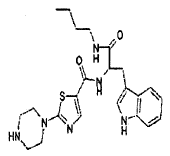 |
| NPT200-5 |
Synuclein, the common factor in primary dementia (Alzheimer’s, Lewy body disease, multiple system atrophy) and Parkinson’s disease, can adopt complex structures with two-alpha helixes at the N-terminus and a movable C-terminus tail. WO 2011/084642 (Neuropore Therapies [US]; July 14, 2011) focuses on compounds that block this formation of toxic oligomers instead of fibril formation. In a transgenic mouse model, the lead compound NPT200-5 (see figure) completely blocked synuclein aggregation early and late in the oligomerization process at 5 μΜ, with an ED50 of 0.1 μΜ. When the B103 neuronal cell line was infected with a lentivirus expressing synuclein, there was a 50-60% reduction in the levels of aggregates (but also the monomers) in the various fractions.
Parstatin, An Ocular Angiogenesis Inhibitor and Cardioprotectant
This anti-angiogenetic 41-amino acid peptide, which thrombin cleaves from the the proteinase-activated receptor 1 (PAR1) and is its putative signal peptide, did not appear in the peer-reviewed literature until 2009 (see here). The present patent application, WO 2011/087491 (Johns Hopkins University [US]; July 21, 2011) which names the original discoverers from the Greek University of Patras as inventors, is largely a companion document to two papers published in March and November 2010 (see here and here) that describes the utility of angiostatin in ocular neovascularization and inflammation, as well as cardioprotective effects in myocardial ischemia which seem to be mediated through the PI3K/Akt pathway; NO-related mechanisms were excluded by specific experiments. The difference is that the patent identifies partial hydrophobic sequences (esp. aminoacids 1-26) as being suitable for the treatment of corneal neovascularization, wet age-related macular degeneration, diabetic retinopathy, and cardiac reperfusion injury.
Prenyltransferase Inhibitors To Treat Hepatitis Delta
Farnesyl:protein transferase (FTase) inhibitors, which block farnesylation and geranylgeranylation of proteins, are known for their potential as anticancer agents. The large antigen of hepatitis delta virus ( HDV) contains a so-called CXXX box, a structural motif consisting of a cysteine residue at the C-terminal tetrapeptide of a protein that is a potential farnesylation site. In WO 2011/088126 (Eiger Biopharmaceuticals [US]; July 21, 2011) this is exploited for using a range of structurally diverse FTase inhibitors as HDV inhibitors. Almost predictably for those who follow this field, Merck’s lonafarnib (in Phase II trials for breast cancer and progeria) and AstraZeneca’s AZD3409 (discontinued in 2006) and are among the claimed compounds, but several others (e.g., L-744,832 and RPR-130401, to name only a few examples) are also included. HDV needs hepatitis B virus to propagate and greatly exacerbates HBV infection. AZD3409 was tested in Huh7 cells transfected with a combination of plasmids coding for HDV large antigen and Hepatitis B surface antigen, where it abolished HDV particle production in a dose-dependent manner (EC50 = 0.12 µM), without significant inhibiting HBV replication.
A Tricyclic Antidepressant for Lung Cancer
Amitryptiline is one of the most effective antidepressants ever marketed, and it is only for the side effects of this particular structural drug class that it has largely fallen out of favor. It has already been repurposed once, as a transdermal gel to treat neuropathic pain especially if it coexists with depression. WO/2011/089289 (University of Sevilla [ES]; July 28, 2011) suggests another use: non-small cell lung cancer. While there have been some reports on the cyctotoxic properties of amitryptiline in the 1990s, the mechanism was never properly elucidated. The present inventors suggest that the action is through oxidative stress: a study of the activity of respiratory chain complexes in the NSCLC cell line H460 showed a significant decrease in the activity of the mitochondrial complexes I and III after treatment with 50 μΜ amitryptiline, which did not occur in the presence of antioxidants. In these assays amitryptiline induced more apoptosis than camptothecin, doxorubicin, or methotrexate.
Amitryptiline is one of the most effective antidepressants ever marketed, and it is only for the side effects of this particular structural drug class that it has largely fallen out of favor. It has already been repurposed once, as a transdermal gel to treat neuropathic pain especially if it coexists with depression. WO/2011/089289 (University of Sevilla [ES]; July 28, 2011) suggests another use: non-small cell lung cancer. While there have been some reports on the cyctotoxic properties of amitryptiline in the 1990s, the mechanism was never properly elucidated. The present inventors suggest that the action is through oxidative stress: a study of the activity of respiratory chain complexes in the NSCLC cell line H460 showed a significant decrease in the activity of the mitochondrial complexes I and III after treatment with 50 μΜ amitryptiline, which did not occur in the presence of antioxidants. In these assays amitryptiline induced more apoptosis than camptothecin, doxorubicin, or methotrexate.