

Greetings to our followers! Here are eight international patent applications from the life sciences published in October 2011, plus two that have the October 27 date but came online only in November after our last issue of these Patent Highlights was published. This review has new drugs for malaria, tuberculosis and viral infections; personalized therapy for Fragile X syndrome; a progranulin antibody for liver cancer; known drugs repurposed for mountain sickness, hyperlipidemia, tinnitus and ovulation induction; and a drug delivery implant for the inflamed knee joint.
PLEASE CITE AS: Mucke HAM. Patent Highlights for November 2011. Published online on the H.M. Pharma Consultancy Blog (URL:http://hmpharmacon.blogspot.com/2011/11/patent-highlights-for-november-2011.html) on November 27, 2011. Contact us at office@hmpharmacon.com.
—
Oxoisoaporphines for Malaria, 4-Thioureido-iminomethylpyridinium for Tuberculosis
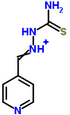
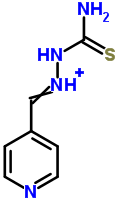
After a lull of decades, malaria drugs are becoming a hot topic now – economic development of countries where the disease is endemic, its re-emergence in major markets, and increased tourism to the tropics are making this happen. WO 2011/131816 (Univ. Santiago de Compostela [ES]; Oct. 27, 2011). The patent seems to be an outgrowth of computational biology efforts (see also here) using drug-protein interactions documented in DrugBank. The orally bioavailable 5-methoxy-6-oxoisoaporphine is highly active and selective in combating the first phases of liver infection by P. falciparum. – Tuberculosis, another re-emerging threat, is the objective of WO 2011/132114 (Pharmasyntez [RU]; Oct. 27, 2011). Very similar compounds to the one claimed here (see figure) have been described as cholinergic nerve gas antidotes (see here).
A Companion Diagnostic for A Fragile X Syndrome Drug Candidate
Novartis’ AFQ056 (mavoglurant) is a mGluR5 antagonist under clinical investigation for levodopa-induced dyskinesia in Parkinson’s disease, but also for Fragile X syndrome which is caused by expansion of a CGG repeat in the 5′ untranslated region of the fragile X mental retardation 1 (FMR1) gene. (Details for ongoing Phase II/III study here). In a pilot study, mavoglurant improved 7 patients with full FMR1 promoter methylation and no detectable FMR1 messenger RNA, but not 18 patients with partial promoter methylation, compared to placebo ); WO 2011/137206 (Novartis [CH]; Nov. 3, 2011) takes care of the intellectual property side of these findings (published here) by claiming levels FMR1 mRNA transcript, FMR1 protein levels, or methylation of an FMR1 gene region as biomarkers for drug responsiveness.
Destabilizing Viral Capsids for Antiviral Activity
 |
| CMPD-A |
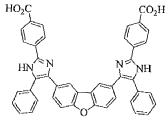
The HIV-1 capsid shell is composed of about 250 assembled mature capsid protein hexamers and 12 pentamers. WO 2011/139637 (Philadelphia Health & Education [US]; Nov. 10, 2011) uses this as the point of attack against HIV but also other viruses. 4-(4,5-diphenyl-1H-imidazol-2-yl)benzoic acid (CMPD-E, I-XW-053) showed IC50 valued between 51 and 94 µM for 4 HIV-1 strains from subtypes A, B and C. 4,4′-(5,5′-(dibenzo[b,d]furan-2,8-diyl)bis(4-phenyl-1H-imidazole-5}2-diyl))dibenzoic acid (CMPD-A; see figure) had an IC50 of 33 μΜ against HIV-1 but is even more effective against Dengue virus strains (IC50 = 2-8 µM) and respiratory syncytial virus (IC50 = 10.2 µM). Docking sites to the N-terminal domains of the viral capsid proteins and mechanisms for destabilization are proposed.
A New Attack Angle for Hepatic Cancer
A decade ago granulin-epithelin precursor (GEP, also progranulin, acrogranin, or PC-derived growth factor) was identified as a high molecular weight secreted mitogen, and later as a potential therapeutic target for hepatocellular carcinoma where it is overexpressed (see here). Its expression in liver cancer stem cells is associated with chemoresistance and reduced survival times. Suppression of GEP can enhance the apoptotic effect of chemotherapy because it also regulates the ATP-dependent binding cassette (ABC) drug efflux transporter family that play a role in chemoresistance, such as ABCB5 and ABCF1. Targeting GEP with RNA interference has been proposed, but monoclonal antibodies have also been described for some time. WO 2011/140828 (Hong Kong Univ. [CN]; Nov. 17, 2011) claims and characterizes such an antibody, alone and in combination with doxorubicin chemotherapy.
Hydroxymethylfurfural for Mountain Sickness
Alleviating the symptoms of altitudinal hypoxia in healthy persons might not be the most pressing concern of drug development; but there is no FDA approved drug that lowers the P50 value of hemoglobin (and thus increases its affinity for oxygen) in normal subjects. Mountaineers and people dispatched to high places for professional reasons are a market that could be addressed with relative ease – easier than the market for sickle-cell disease for which such drugs are normally investigated, for example by the company that now got WO 2011/146471 (AesRx [US]; Nov. 24, 2011) published. The preferred compound is 5-methoxy-2-furfural (5-HMF) or a prodrug thereof. This compound is present in heat-processed diary products such as coffee and caramel products, sometimes at a concentration above 6 g/kg – but the effective dose is 3-5 grams, so you would have to consume a lot of these products to not need the drug if you ascend to 3,000 meters and above.
More From the Drug Repurposing Cabinet
There are more examples that claim new uses for known drugs. WO 2011/144545 (Unilever [NL]; Nov. 24, 2011) claims theobromine for dyslipidemia – indeed, cocoa powder and dark chocolate, which contain theobromine, are known for this effect. In WO 2011/145062 (Link Research [PA/MC]; Nov. 24, 2011) it is the prototypical opiate receptor antagonist naltrexone, claimed here as being useful to treat tinnitus – a condition which is among the most difficult ones to address pharmacologically. This has a clear rationale, as the current model for tinnitus involves has dynorphins – endogenous opiates – enhancing the action of glutamate on sensorineuronal hair cells in the cochlea (see here). The main purpose of WO 2011/143752 (Univ. Saskatchewan [CA]; Nov. 24, 2011) claiming aromatase inhibitors such as letrozol for timing ovulation in an animal or synchronizing it in a herd, is a human-to veterinary transmigration – perhaps nobody has thought of using this application of anticancer agents (which is a new but established practice in in vitro fertilization; see here) in domesticated animals before.
An Artificial Bursa for Drug Delivery
WO 2011/139594 (Medtronic [US]; Nov. 10, 2011) offers a solution for the numerous (primarily degenerative and/or inflammatory) disorders which affect the normal workings of the knee. Advancing a concept that Medtronic and other medical device manufacturers have proposed before, the inventors propose inserting a flexible polymeric drug delivery device (preferred volume, 0.75 – 1.5 ml) through the synovial joint and anchoring it within the joint capsule so that it does not substantially interfere with movement of the joint. This achieves high local drug concentrations while avoiding excess systemic burden.