

Here is our first post focusing on international patent applications that concern themselves with some new applications for known or discontinued drugs. In this pilot issue we highlight documents published between December 29, 2011 and January 12, 2012.
H.M. Pharma Consultancy is a leader in knowledge extraction from drug repurposing patent documents, and gives strategic advice to developers looking for repurposing opportunities. Find out more at www.hmpharmacon.com. or contact us at office@hmpharmacon.com.
An ACAT-1 Inhibitor for Diabetes
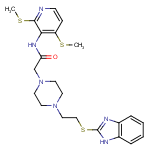
Kowa Co. Ltd. is developing K-604, a competitive inhibitor of acyl-coenzyme A:cholesterol O-acyltransferase-1, as an oral drug candidate for atherosclerosis (see here); a Phase II clinical study (NCT00851500) was completed in August 2011. The hypocholesterolemic mechanism is clear enough, but a direct antidiabetic action – with lowering of plasma glucose and insulin resistance, as claimed in WO 2011161964 (Kowa [JP]; Dec. 29, 2011) – is much more difficult to envisage. One lead to follow could be the fact that the old sulfonylurea antidiabetic, glibenclamide is also an ACAT inhibitor (see here). However, the chemical structure of K-604, which is N-[2,4-bis(methylsulfanyl)pyridin-3-yl]-2-(4-{2-[(6-methyl-1H-1,3-benzodiazol-2-yl)sulfanyl]ethyl)piperazin-1-yl)acetamide, is quite different.
Fragile X Mental Retardation Protein and Metastasis
Quite soon, Fragile X syndrome, the most common geneticall determined form of mental retardation, could become be the first neurobehavioral disorder in which corrective treatments have been developed from the bottom up (see here). And now, WO 2012/001178 (University Leuven [BE]; Jan. 5, 2012) tells us that the faulty Fmr1 gene product (deficient in its capability as an RNA-binding protein involved in multiple steps of neuronal RNA metabolism) may help prevent or reduce metastasis. The inventors stop short of claiming that inhibitors of group 1 metabotropic glutamate receptors (in particular, of mGluR5 as in the case of AFQ056, also under development for levodopa-induced dyskinesias) which are under investigation for Fragile X syndrome could be reporposed for metastasis — after all, the mechanisms could be very different. However, claim 14 is for “an FMR1 inhibitor for use in the treatment and/or prevention of metastasis,” and that’s what counts in patenting.
Propofol for Influenza
WO 2012/004768 (Individual inventor [FR]; Jan. 12, 2012) is our definite favorite in this issue. For who would have expected this injectable anesthesia agent (2,6-diisopropylphenol; marketed as Diprivan by AstraZeneca, and as generic products) to protect against enveloped viruses? In specifically pathogen-free 10-day old chicken embryos protection against influenza A virus was observed at propofol doses between 32 µg and 625 µg per egg; the highest dose resulting in survival of all embryos. The peer-review literature does not seem to contain any data that might suggest such an effect. Note that hepatitis C virus can apparently survive in commercial preparations of propofol for extended periods; see here.
Etanercept for Fibromyalgia
Etanercept (Amgen’s and Pfizer’s Enbrel® for rheumatoid arthritis) is a recombinant fusion protein that captures tumor necrosis factor alpha. Of course TNFα, a proinflammatory cytokine, has been strongly implicated in fibromyalgia for many years (see e.g., here); but in WO 2012/004966 (Axis Inc. [JP]; January 12, 2012) the inventors claim to see room for getting etanercept patented for this application. In 2009 a paper from Lyon Hospital has stated the association between rheumatoid arthritis and fibromyalgia to be “fortuitous,” and Chinese researchers found short-term use of etanercept (<3 months) to be without significant effect in fibromyalgia syndrome (see here).